
About the Council
An international organization working to promote Arab-African economic integration and support investment and sustainable development through trusted strategic partnerships.
We present and clarify the legal basis for the presence of the Supreme Council for Arab-African Economy in the international community and its acquisition of legal personality as an entity under international law.
Only states and international organizations, in all their legal forms, are considered subjects of international law, which reflects the international legal protection granted to the Council and its team working to achieve its objectives.
About The Supreme Council for Arab-African Economy
- The Supreme Council for Arab-African Economy is a global, non-profit international organization dedicated to establishing a comprehensive Arab-African system aimed at integrating it with countries worldwide and cooperating with business leaders and their economic entities and institutions, in line with the Council’s vision to achieve economic integration and sustainable development.
- The Council employs the latest methods of modern economic diplomacy to enhance international cooperation, support economic stability, and open broad horizons for investment partnerships between Arab and African countries and all nations around the world.
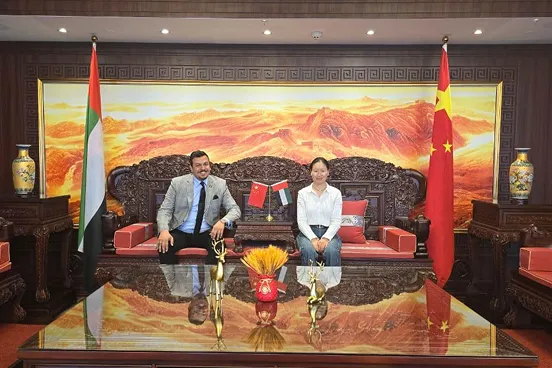
- The Supreme Council for Arab-African Economy holds numerous international headquarters agreements with the Ministries of Foreign Affairs of member states to implement the Council’s vision of expanding and establishing its presence globally.
- The Council’s team members acquire the status of international civil servants in accordance with the Advisory Opinion issued by the International Court of Justice in 1949, which recognized the status of international civil servants for anyone working to achieve the objectives of an international organization, regardless of whether they work permanently or temporarily, and whether they are paid or volunteers. This comprehensive concept, as defined by the International Court of Justice, grants all members of the Supreme Council for Arab-African Economy the status of international civil servants, thus providing full international legal protection to all personnel according to the rules and sources of international law.
- The staff of the Supreme Council for Arab-African Economy enjoys all diplomatic privileges and immunities under international law. Numerous international agreements and treaties recognize the absolute immunity of international civil servants, ensuring their independence and complete loyalty to the international organization they serve. This immunity applies worldwide, including the employee’s country of nationality, in accordance with the provisions and sources of international law detailed below:
- Provisions of Articles 57, 63, and 105 of the Charter of the United Nations (1945).
- The preparatory works of the United Nations Conference in San Francisco (1945), which affirm the absolute immunity of international civil servants.
- Provisions of the Convention on the Privileges and Immunities of the United Nations (1946).
- Provisions of the Convention on the Privileges and Immunities of the Specialized Agencies of the United Nations (1947).
- Provisions of the Vienna Convention on Diplomatic Relations (1961).

Legal Status and Establishment
The Supreme Council for Arab-African Economy was established in accordance with French law, under the provisions governing non-profit organizations, and obtained the official license from the French government with number: (W751262797).
The Council began its activities in 2017, and its establishment procedures were completed on 11/8/2021, and it was officially published
in the French Official Journal, issue number 1735 dated 11/23/2021
Official Registrations and Accreditations
The Council has been registered in a number of official and governmental records, most notably:
Registration number in the European Union Transparency Register: (75/254941445133)
Registration number with the French Government: (909153330)
International Identification Number: 90915333000016
International Statistics Center (Organization Classification): Grade A
The Council also enjoys
As an advisory council to the United Nations,
according to its accreditation by the United Nations Economic and Social Council
(ECOSOC),
the Council also holds numerous headquarter agreements with the Ministries of Foreign Affairs of the member states.
International and Humanitarian Role
- The Supreme Council for Arab-African Economy plays a leading international role in forming a global trade and investment bloc, encompassing more than fifteen thousand economic and investment entities from various countries around the world.
- In addition to its economic role, the Council holds an international humanitarian mandate aimed at supporting humanity and human rights, contributing to the advancement of the global community by ensuring a balance between economic development and social responsibility.
- The Council plays a significant role in the international community as one of the international organizations that undertake the role of international mediation to resolve regional and global disputes, as well as conflicts within a single region, aiming to advance humanity and support human rights worldwide within the framework of international law.
Our Vision
Supporting and Making Economic Decisions
Expansion of Project Implementation
Conducting Technical Studies and Providing Advisory Support
Economic Diversification
Attracting and Guiding Investments
Establishing a Free Trade Area Built on Trust Among All Countries
Promoting Trade Through International Agreements
Supporting the Digital Economy Through Modern Technology
Participation in International Economic and Humanitarian Forums
Strengthening Economic Integration
Strategic Partnerships for Integration
Supporting and Protecting Human Rights
Our Mission
Our Core Values
- Arab-African Unity and Integration
- International Cooperation and Economic Partnerships
- Transparency and Institutional Governance
- Economic Sustainability
- Fair Competition and Anti-Monopoly Measures
- Market Stability and Investment Attraction
- Supporting Technological Advancement and Digital Transformation to Boost National Economies
Our Objectives
- Global Expansion: The Council aims to expand its international presence through the signing of headquarters agreements with governments and their Ministries of Foreign Affairs, in addition to other international agreements held by the Council.
- Enhancing Arab-African Economic Cooperation: Strengthening economic collaboration between Arab and African countries and the rest of the world by providing official channels with governments that support this goal.
- Providing a Trustworthy Investment Environment: Establishing an investment climate based on trust, transparency, and credibility, aligned with modern economic developments to serve the interests of countries and their peoples.
- Capacity Building for Arab and African Entities: Developing the skills of Arab and African institutions through cooperation agreements with global entities to jointly implement projects, enhancing the efficiency and performance of small and medium institutions, and promoting excellence through practical participation and support from leading global experts.
- Enhancing Economic Performance: Improving the performance of public and private institutions in the Arab world and African countries.
- Promoting Trade and Investment: Boosting Arab-African trade and investment activities in collaboration with international economic entities.
- Establishing an Integrated Economic System: Developing a comprehensive economic system to attract investments while protecting markets.
- Creating a Competitive Economic Environment: Preventing monopolistic practices and promoting optimal use of resources.
- Providing Advisory Services: Offering feasibility studies and consultancy services to government and non-government economic entities.
- Supporting Governments in Crisis Management: Advising governments and national entities on managing crises and analyzing economic landscapes to achieve sustainable development.
- Promoting Human Rights and Social Responsibility: Upholding human rights and contributing to societal and humanitarian roles in accordance with international law.